
Have you ever learned the same lesson more than once?
I sure have.
So some of the financial lessons below are reminders, repeats, or the otherwise ongoing learning that comes from taking care of money.
These lessons are sort of all over the place, but that makes sense because there are endless facets to overseeing your money.
Click to Open Table of Contents >>>>>
Financial Lesson 1
Strategizing about the best time to start Social Security benefits is hard but hugely important because it involves probably tens of thousands of dollars, maybe more.
The Social Security benefits for the first spouse to depart this earth can be assumed by the surviving spouse.
This means you have to consider if you or your spouse is most likely to die first.
And if you’re unmarried, you have to consider how long you’ll live.
Ouch!
This is hard to do but well worth the effort.
I find the key is to become completely pragmatic. If you cannot do this on your own, hire a financial planner for an hour if you don’t work with an advisor already. If you do work with a financial advisor, ask them to help you with this assessment.
Financial Lesson 2
We may want to continue to hold assets to gain large tax benefits.
This lesson is a little complicated, but it’s huge for those with assets that have increased in value over the decades.
I suddenly realized spouses can often get stepped up basis on many assets for either full value or 50% of the asset value when the first spouse passes.
If I’m starting to sound like Debra Winger in Black Widow, let me explain.
This realization came up because Larry and I are holding an asset with a big fat capital gain; we were thinking of selling it, so I was analyzing various tax outcomes should we decide to go ahead and sell it.
Like most tax rules, this isn’t a simple one but it’s worth considering if you’re thinking of selling an appreciated asset and you’re married.
The rule varies depending on whether you live in a community property state; having an asset in an entity such as an LLC can also make a difference.
The bottom line is that we all pay taxes on most gains, and later in life gains can be huge due to the decades an asset has been owned.
This means you can incur a big tax bill if you sell an asset that has increased in value over the years. Such a tax bill can mean a huge chunk of profits can go toward paying taxes.
If you sell the asset after one spouse dies vs. selling the asset as a couple, however, there’s a good chance half of the asset will get stepped up basis to the time of your spouse’s death. This can lower a huge tax bill because the cost of the asset used in calculating your gain is usually much higher when the value used for cost is recent.
While this might sound cynical, immortality is a fact of life. The reality is that each spouse needs to be left in a financial situation that’s as good as possible, especially given the inevitable grief.
We’re not talking about chump change here; we’re talking about a tax bill that can make or break financial independence.

Financial Lesson 3
Patience and discipline are called for when investing, even or espeically with risk management in place.
Some of you know I use an ETF rotation strategy that rotates into various asset classes by closely following a professionally developed strategy that I selected based on 40 to 50 years of past performance data.
I do this because I don’t like “riding out” bear markets as an older investor but I like to be able to invest in stocks when it makes sense due to the growth opportunity.
I found using an ETF rotation strategy the best way to accomplish this overall goal of low risk with higher growth potential than holding a fixed stock and bond index portfolio as explained more in my Allocate Smartly Review. (I like them so much I became an affiliate.)
Here comes the lesson, although I’ve learned this one multiple times over the past 40 years:)
Using a defensive strategy like the one I use instead of just plopping money into the high tech growth stocks when they’re soaring to the stratosphere and beyond requires discipline and patience especially when high tech growth stocks perform outrageously well.
Fortunately or maybe unfortunately, I have the wisdom of the NASDAQ tech bubble experience, so at least that helps me be patient.
This discipline has paid off, however.
When most stock and bond portfolios tanked as intermediate as long term Treasury bonds continued their descent in 2023, for example, my selected ETF rotation strategies proved my patience was worthwhile.
Just take a look below at the long term bond ETF, TLT, to see what I mean while remembering most investors own TLT for risk management.
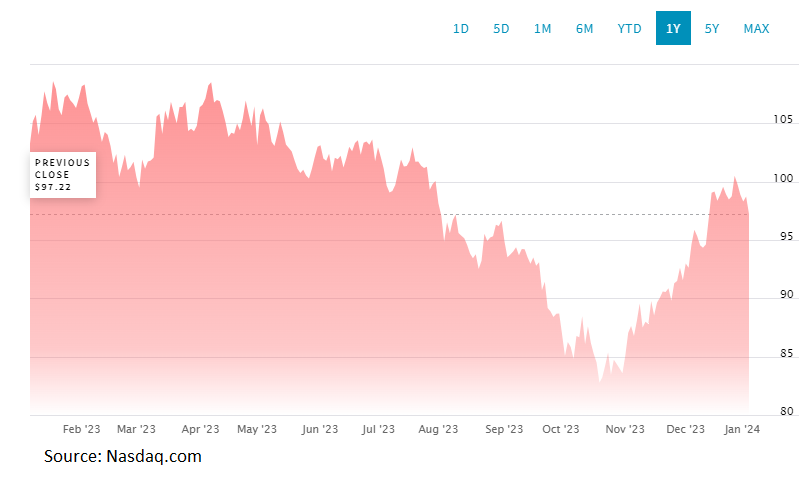
So I was investing with risk management in place, but I found once again that patience and discipline were required to follow my selected strategies.
Financial Lesson 4
If you own a home you’re a real estate investor.
Conventional finance suggests we exclude our home values from our asset allocation percentages when considering how much money we have and where.
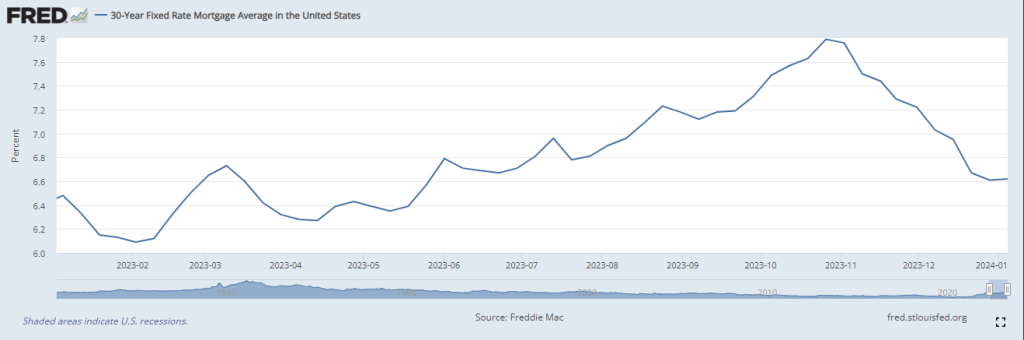
As interest rates continued their ascent and the value of one of our largest assets declined, I was reminded once again how much of our net worth is allocated to real estate.
That makes us a long term “buy and hold” real estate investor, but a real estate investor, nonetheless.
You probably are too.
Older investors, in particular, can have a large portion of their net worth tied up in their homes. That home equity could also be used as an asset to grow wealth, however.
This means that if you own a home, you’re a long term real estate investor because you’re making a decision to keep your money tied up in your home.
Financial Lesson 5
Emotions affect investment decisions by almost everyone.
Over the past few years, I have become a more mindful investor as I increased my meditation practice.
This led me to journal once again about financial mistakes from decades past; why I made them, and what I learned from them.
What I learned once again is that unexamined emotions very quietly hurt investment returns.
I’ve learned this firsthand and seen it in coaching investors and even when coaching financial advisors.
We can greatly improve our financial situation by simply increasing mindfulness around our money.
This is probably the easiest way to increase wealth. It sounds crazy but it’s true.
I wonder what financial lessons next year will bring….
and can I influence them positively with foresight today?